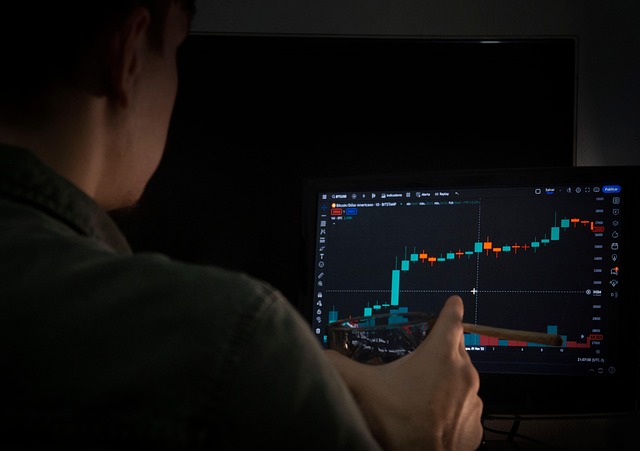
Retail participation in crypto has dropped sharply — and many small investors appear to be looking elsewhere.
Spot trading volumes are down between 25% and 30%, while Estimated Leverage Ratios (ELR) have fallen 28%. The shift comes roughly four months after Bitcoin peaked at $126,000 and then tumbled 46%.
For many retail traders, that correction seems to have been the breaking point.
Instead of aggressively “buying the dip” — the strategy that defined much of the 2024–2025 rally — capital is now rotating into equities. Liquidity on major crypto exchanges is thinning, and rather than moving in tandem with tech stocks, crypto is starting to lose capital to them. Stability is winning out over volatility.
Key Takeaways
The Signal: Leverage Has Been Flushed
Estimated Leverage Ratios plunged from 0.1980 to 0.1414 — a 28% drop that effectively wiped out much of the speculative excess in the system.
The Data: Record Retail Inflows Into Stocks
In January 2026 alone, retail traders poured roughly $650 million into stocks and equity options — an all-time high for net inflows.
The Outlook: A Sideways Stretch Ahead?
Some analysts expect range-bound price action through mid-2026, as retail capital remains on the sidelines and institutions dominate crypto flows.
The Data Behind Crypto’s Liquidity Drain
The numbers tell a clear story: the speculative engine has stalled.
Estimated Leverage Ratios fell 28%, sliding from 0.1980 to 0.1414. Activity on major exchanges has cooled significantly — for example, volume on Binance dropped by around $4.7 billion, a 16.4% decline, leaving daily turnover near $24 billion.
Without strong retail participation, price rebounds have been shallow and short-lived. Instead of being fueled by aggressive speculation, markets are now leaning more heavily on slower, passive institutional flows.
The “digital gold” narrative hasn’t disappeared, but short-term traders seem less eager to buy every pullback. After watching Bitcoin fall from $126,000, many are no longer rushing to catch falling knives.
The sharp drop in leverage suggests that the high-risk crowd that powered the 2025 rally has either been liquidated or has simply stepped away.
Retail Isn’t Leaving Markets — It’s Rotating
Importantly, retail investors aren’t moving to cash. They’re moving to stocks.
In January 2026 alone, traders funneled about $350 million into cash equities and over $300 million into stock options. That’s record-setting flow — and a clear sign of shifting preferences.
The BTC-to-Nasdaq volatility ratio has now fallen below 2x. In other words, stocks are offering similar volatility but with smaller drawdowns. After enduring a 46% Bitcoin correction, that trade-off looks increasingly reasonable to risk-conscious traders.
Institutional players are still active in crypto, largely through ETFs. But institutions tend to accumulate quietly. They create price floors — not viral, momentum-driven rallies.
Meanwhile, speculative energy has migrated to AI-linked equities and growth stocks. Retail traders are increasingly using AI tools and language models to analyze earnings reports and search for short-term edges in the stock market. Compared to that, crypto currently feels slower, less transparent, and starved of narrative momentum.
So, Will Retail Come Back?
History suggests retail participation in crypto is cyclical.
Retail tends to return when three things align:
Strong upward momentum
A compelling new narrative (e.g., ETFs, halving cycles, new tech breakthroughs)
The perception that “easy gains” are back
For now, caution dominates. But crypto markets have repeatedly shown that once volatility flips bullish and headlines turn positive, retail interest can surge just as quickly as it vanished.