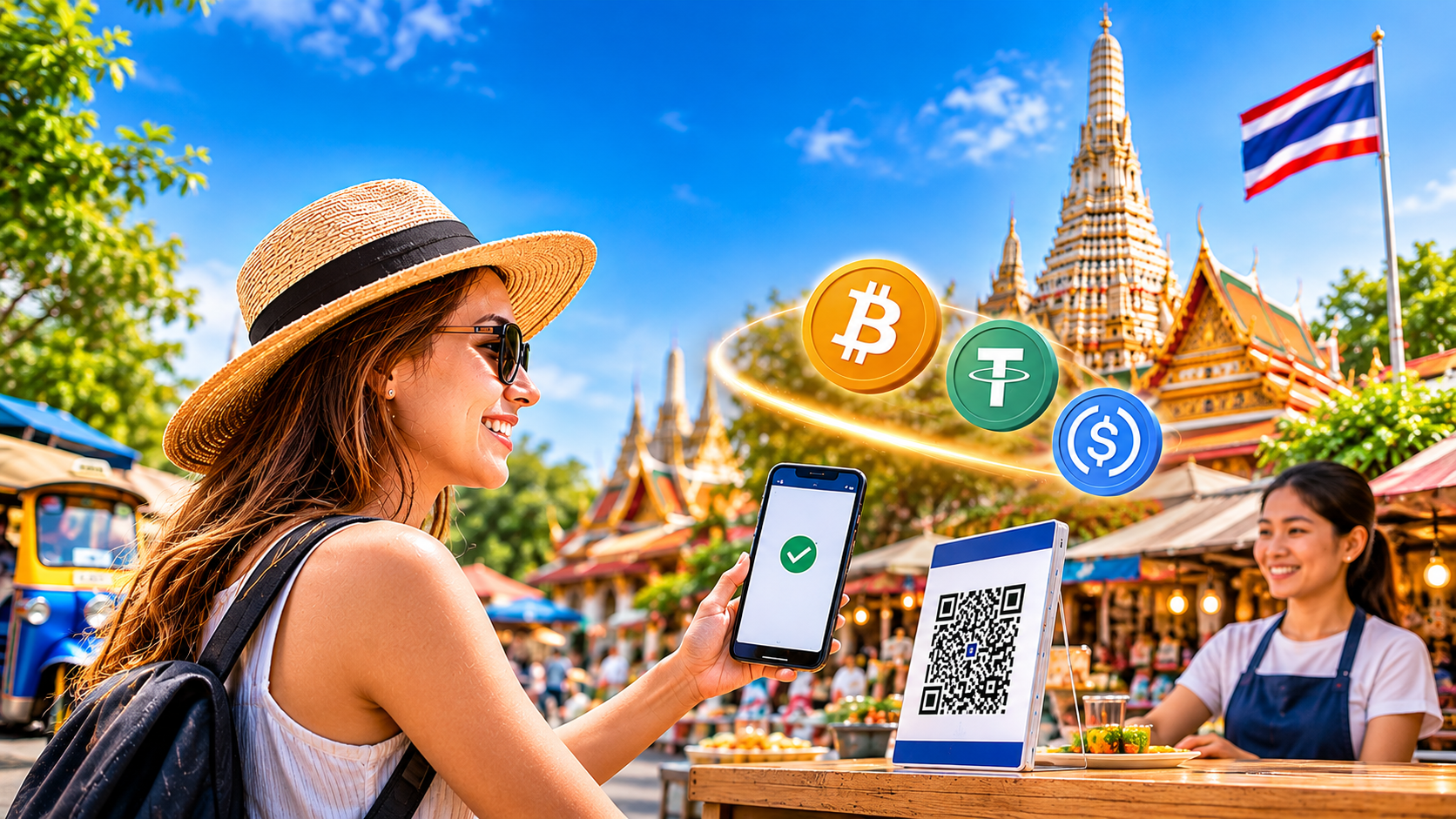
Thailand is taking another step toward mainstream cryptocurrency adoption by enabling international visitors to use their digital assets for everyday purchases. Through a newly introduced payment service, foreign tourists can convert supported cryptocurrencies into Thai baht and pay at participating merchants, including restaurants, retail stores, and other businesses.
The initiative uses WORPT, a payment application that connects cryptocurrency wallets with Thailand’s widely used QR PromptPay network. This allows visitors to make payments without needing to open a local Thai bank account, potentially making digital assets more practical for international travelers.
The development comes as Thailand explores new ways to strengthen its tourism industry and attract international spending. By introducing crypto-friendly payment options, the country is looking to appeal to visitors who already use digital currencies and stablecoins for financial transactions.
WORPT Brings Cryptocurrency Payments to Thai Businesses
The WORPT platform was developed by Wipay and Waan Exchange (Waanx), with support from Tether, the issuer of USDT. The service operates within Thailand’s TouristDigiPay regulatory sandbox, which is overseen by the Securities and Exchange Commission.
The application enables users to convert supported cryptocurrencies, including USDT and USDC, into Thai baht. Once the conversion is completed, tourists can use their available balance to scan QR PromptPay codes and pay participating merchants.
One of the key features of this arrangement is that businesses do not need to accept cryptocurrency directly. Payments are processed in Thai baht, allowing restaurants, hotels, and retailers to continue using their existing payment infrastructure.
Foreign visitors can also avoid opening a domestic bank account. Instead, they need to complete the required identity verification through WORPT and connect an external cryptocurrency wallet to access the service.
According to Thai media reports, the platform initially applies a conversion fee of 1.5%. Additional payment options are also in development, including Visa prepaid cards. Physical cards are planned for November, while virtual card services are expected to arrive in early 2027.
The Mall Group has also joined the initiative as an early retail partner, becoming the first department store group to support the platform. Its involvement could help introduce crypto-funded payments to a wider range of international shoppers.
Thailand Targets 200,000 Crypto Users Through Tourism Initiative
Thailand’s crypto payment rollout comes with ambitious adoption and spending targets. Wipay expects WORPT to attract approximately 200,000 users during its first year, with projected transaction spending reaching 15 billion baht (around $440 million) over the initiative’s 18-month trial period.
The company is particularly targeting visitors from South Korea, Japan, the Middle East, and Southeast Asia. These regions represent potential markets for attracting travelers who already hold cryptocurrencies and could use digital assets to fund their international trips.
The initiative also comes at a time when Thailand’s tourism industry is facing pressure from declining international visitor numbers and weaker tourism revenue. As tourism remains a major contributor to the country’s economy, attracting higher-spending international visitors has become increasingly important.
Crypto holders could represent an additional market for Thailand, particularly as stablecoins become more widely used for storing and transferring money across borders.
Could Thailand Make Everyday Crypto Spending Easier?
For international visitors, converting cryptocurrency into local currency has traditionally involved several additional steps. Tourists holding digital assets often need to use exchanges, arrange over-the-counter (OTC) transactions, withdraw cash, or rely on local banking services before making everyday purchases.
These processes can make relatively simple activities, such as paying restaurant bills, booking hotels, or shopping, unnecessarily complicated.
Security is another concern. Fraudulent OTC brokers, fake cryptocurrency exchanges, and misleading conversion offers have created risks for people looking to exchange digital assets for Thai baht.
WORPT aims to address some of these difficulties by connecting cryptocurrency conversions directly with Thailand’s established merchant payment network. If the service gains widespread adoption, tourists could have a more convenient alternative to traditional crypto-to-cash transactions.
While the initiative is still developing, it represents another example of how cryptocurrency infrastructure is gradually finding practical applications beyond trading and investment.
For Thailand, the bigger opportunity may lie in combining its established tourism industry with an expanding digital payments ecosystem.